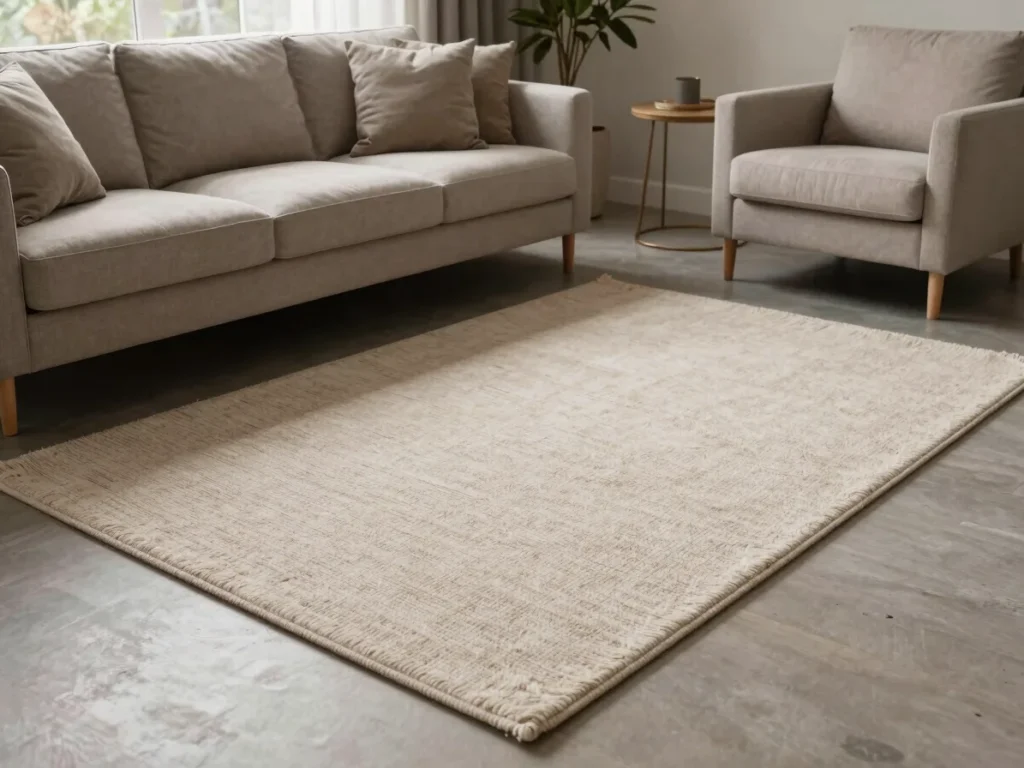
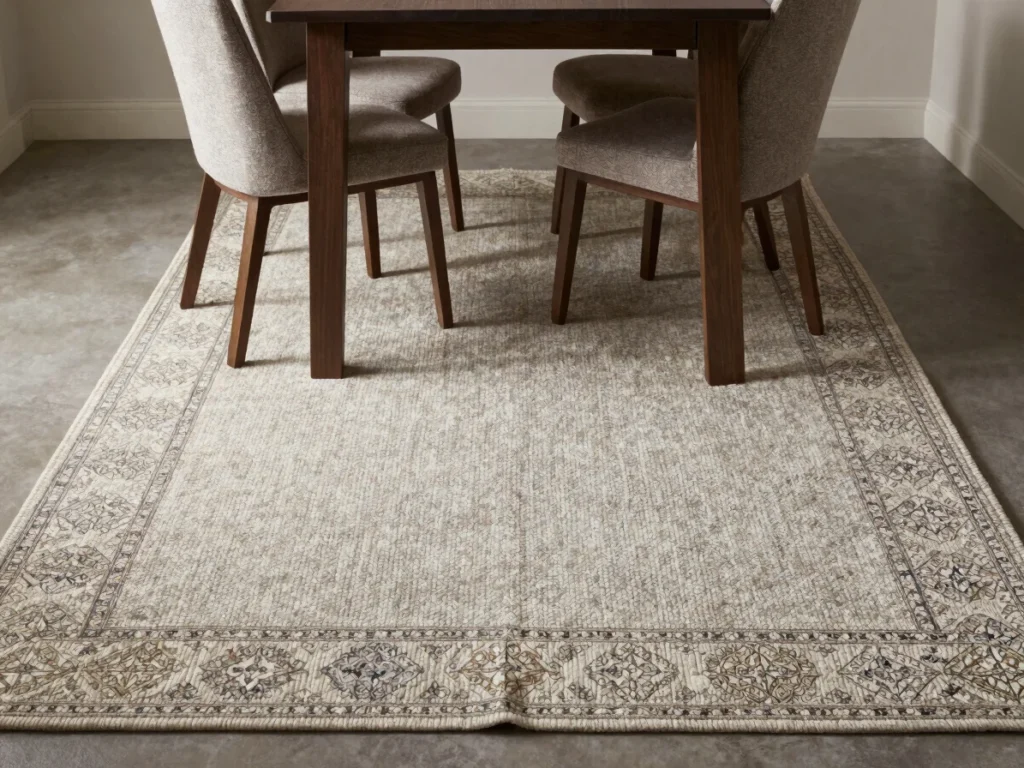
A rug sets the boundaries of a room. Before choosing a pattern or material, measure the space and map where the furniture will sit, so the rug anchors the seating or the table rather than floating beside it.
Once the footprint is clear, pile depth and layout style become easier to decide. Flat low-profile weaves suit busy rooms, plush tufted surfaces add softness underfoot, and framed borders or abstract fields set the tone for the whole space.
Room by room
Sizing for living, dining, and sleeping
For a living room, let the front legs of the sofa and chairs rest on the rug. For a dining room, allow the rug to extend about 24 inches beyond each side of the table so chairs stay on it when pulled out.
Bedrooms and beds
Under a king or queen bed, a rug should extend roughly 18 to 24 inches beyond each side and foot of the frame, so it stays visible when you step out of bed.
Pile depth matters here too: a plush tufted surface feels comfortable underfoot, while a flatter weave keeps the bed base steady.
Measure your room, then browse rugs by size
Take your dimensions to the catalog and find a rug that fits the space.